The rear half of the body finished printing early this morning. Like the front half two nights ago, it took about 12 hours and half a kilogram of PLA. Today I bolted the two halves together, screwed the flat floor plate on, and set the test leg and the breadboard with the Teensy inside. For the first time there is something on the bench that looks like a robot body.
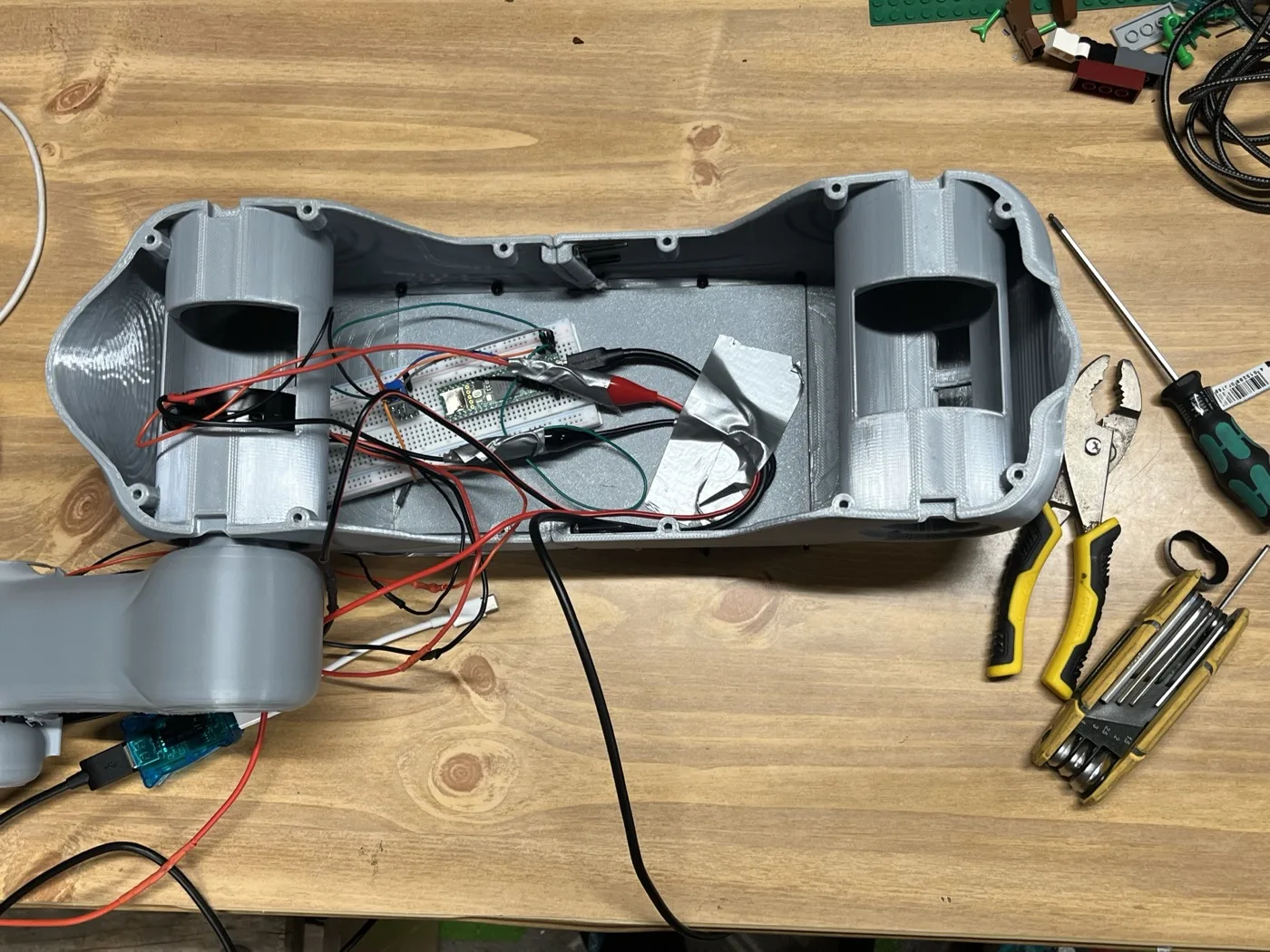
It went together, but not cleanly. The same problems I had with the front half showed up again on the rear, and a couple of them were worse.
Screw holes
Some of the holes for the floor plate were not fully open where they come out of the tub, so the screws had to be forced through. The front half had this too, but the rear half was worse. Those holes sit where the floor curves up into the side wall, so the heads inside and the nuts outside both rest on a slope instead of a flat face.
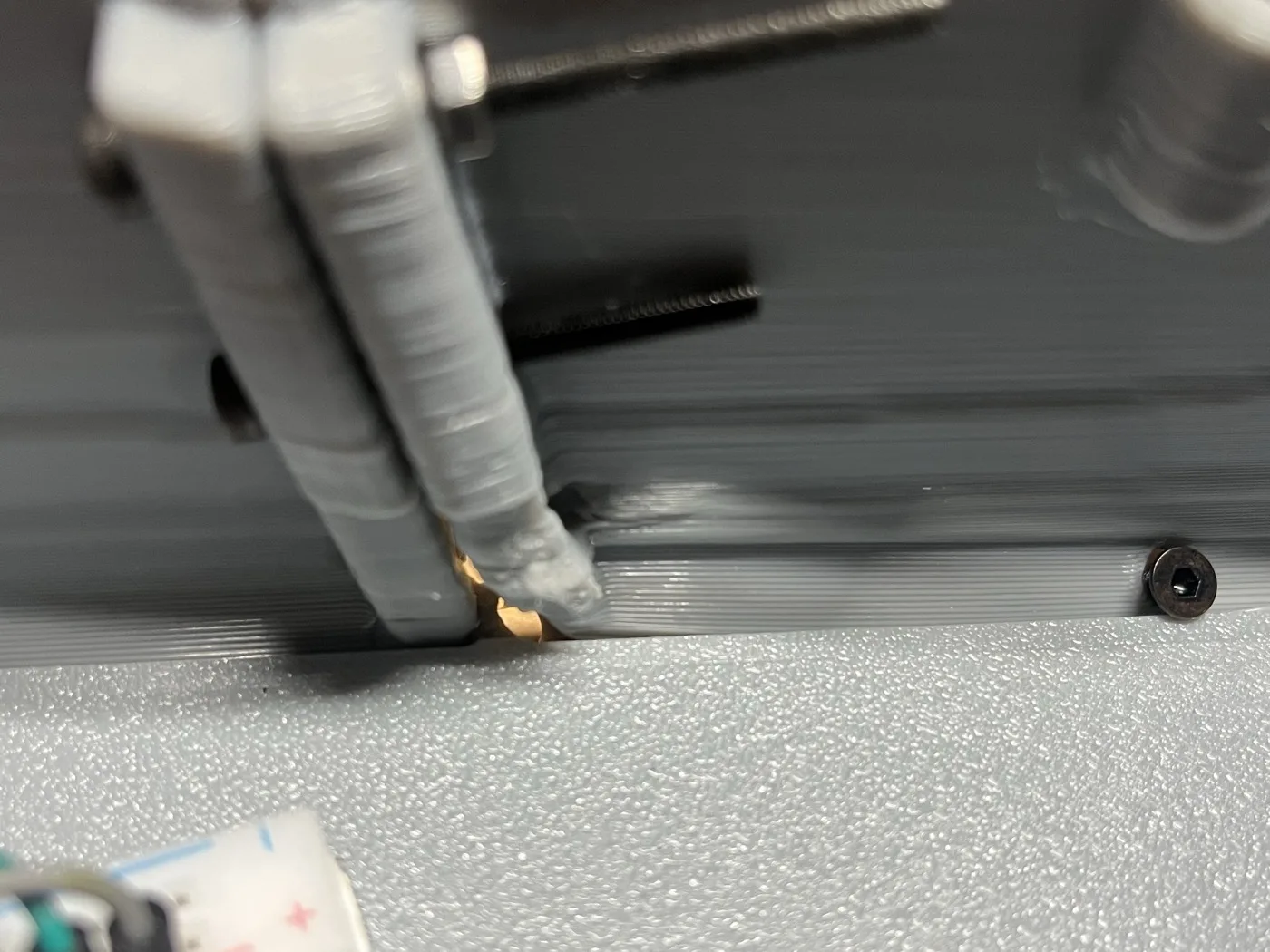
The worst spots are the bolts that join the two halves. Each side has a column of three, and on both sides the bottom one came out damaged. That hole lands right where the wall meets the floor, and the plastic around it printed as a tangle, so the bolt won't go through. One side is much worse than the other.
Warping at the seam
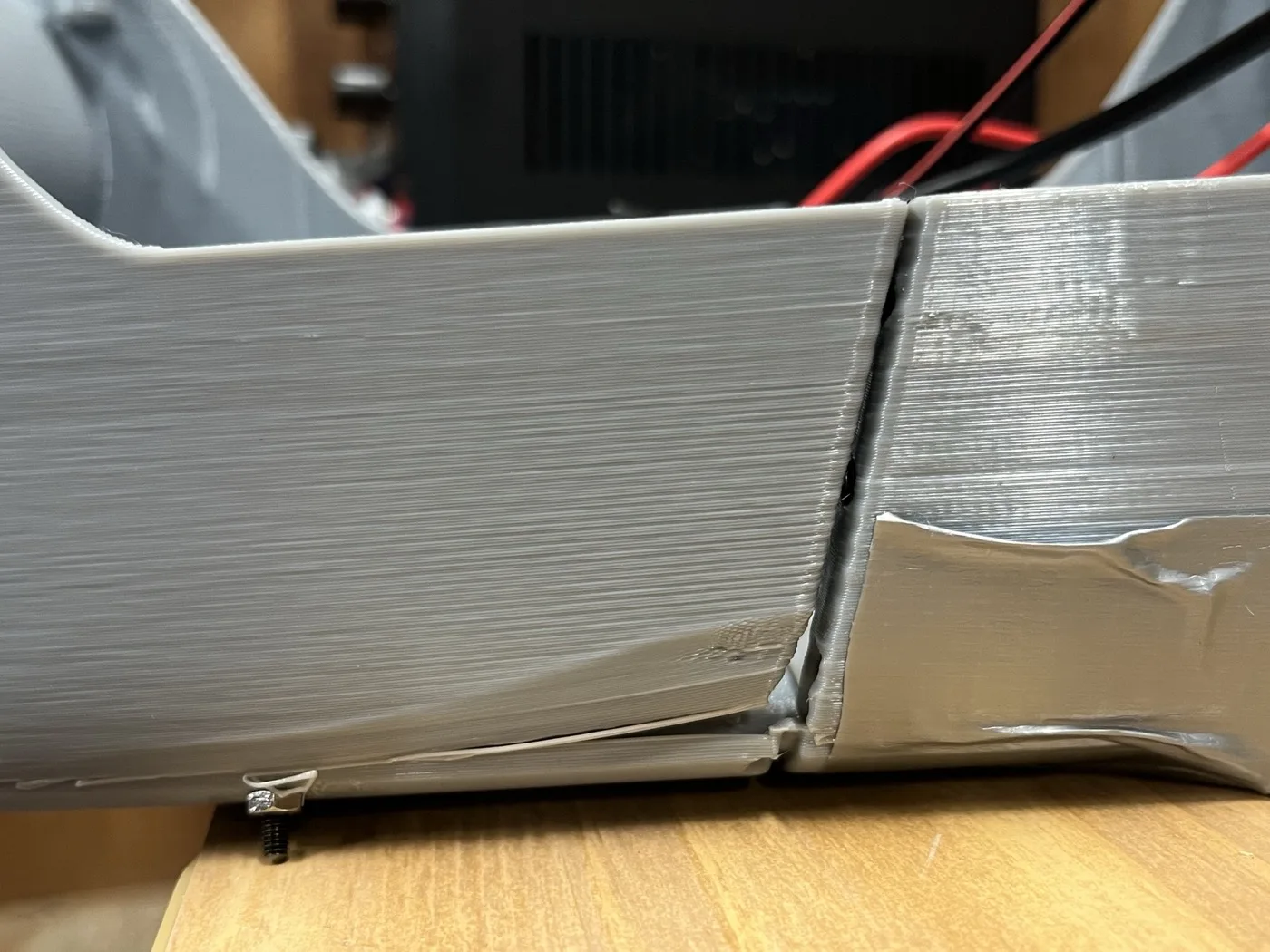
At the bottom of the seam, the lower edges of the two halves don't meet. One of them bows outward a little, which leaves a step and a gap. It's a long, thin edge with nothing holding it, so it moved either during the print or as it cooled. Tape along the bottom closes the gap for now, and it also backs up the floor plate, which only has a handful of screws holding it.
Supports
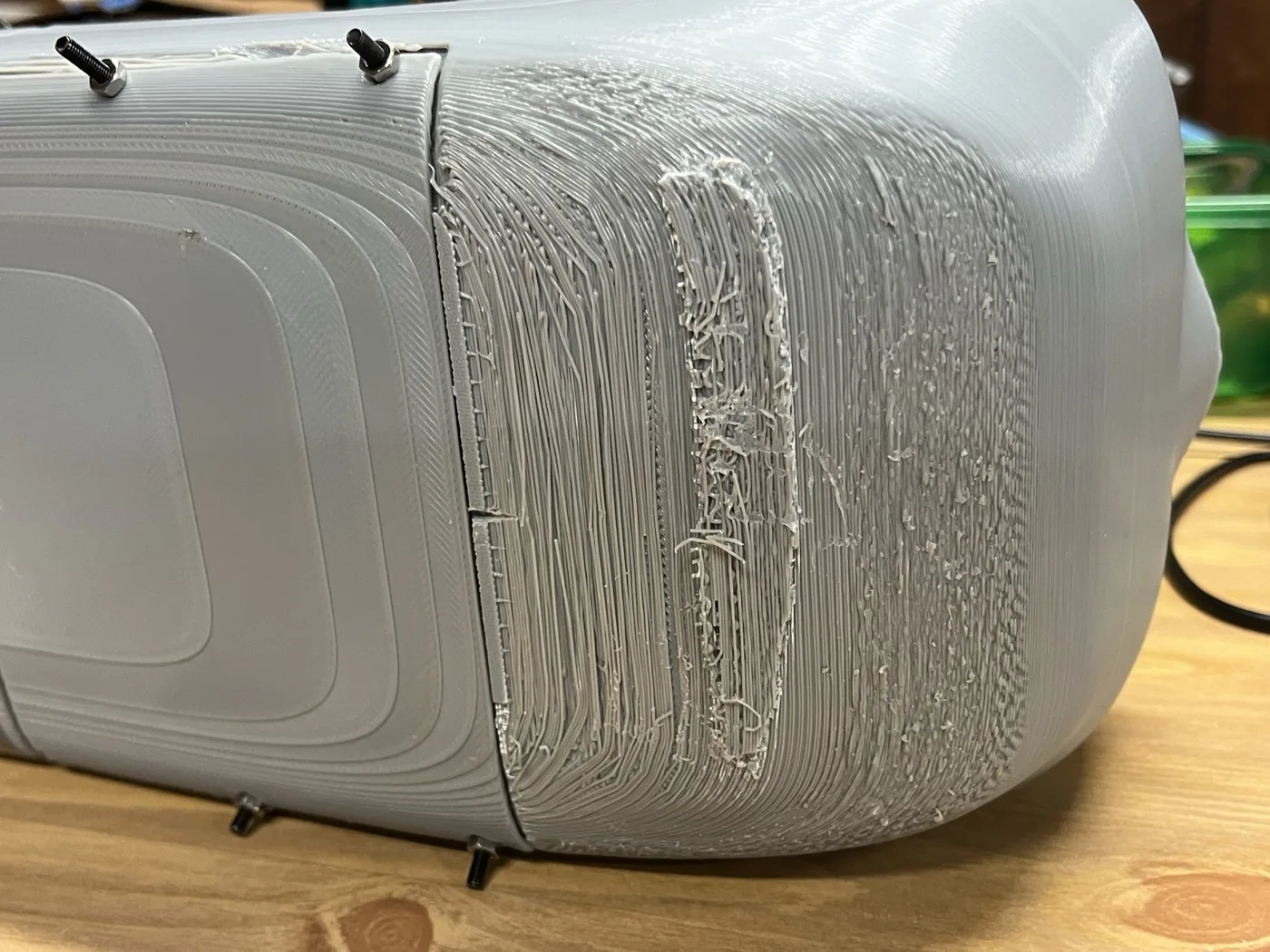
Both halves print standing on their rounded belly, on a raft with tree supports underneath. The supports were hard to get off, the same as on the front half, and the belly is rough where they were. Some of the remains are still on there. None of this affects how the body works, but it takes a while, and the surface isn't the smooth shape I designed.
Good enough for the first robot
All of this is usable. The body holds together, and nothing needs to be reprinted for the first robot. The list for the next version of the body is getting clear, though:
- Probably no battery door. A one-piece floor, with the battery and electronics loaded from the top.
- Screw seats on flat pads, set back from the edges, with slightly larger holes, since holes come out small on this printer.
- Move the lowest seam bolt up off the floor, and add something that locates the two halves before they are bolted.
- Change how the body stands on the print bed, so there is less support under the belly.