Overview
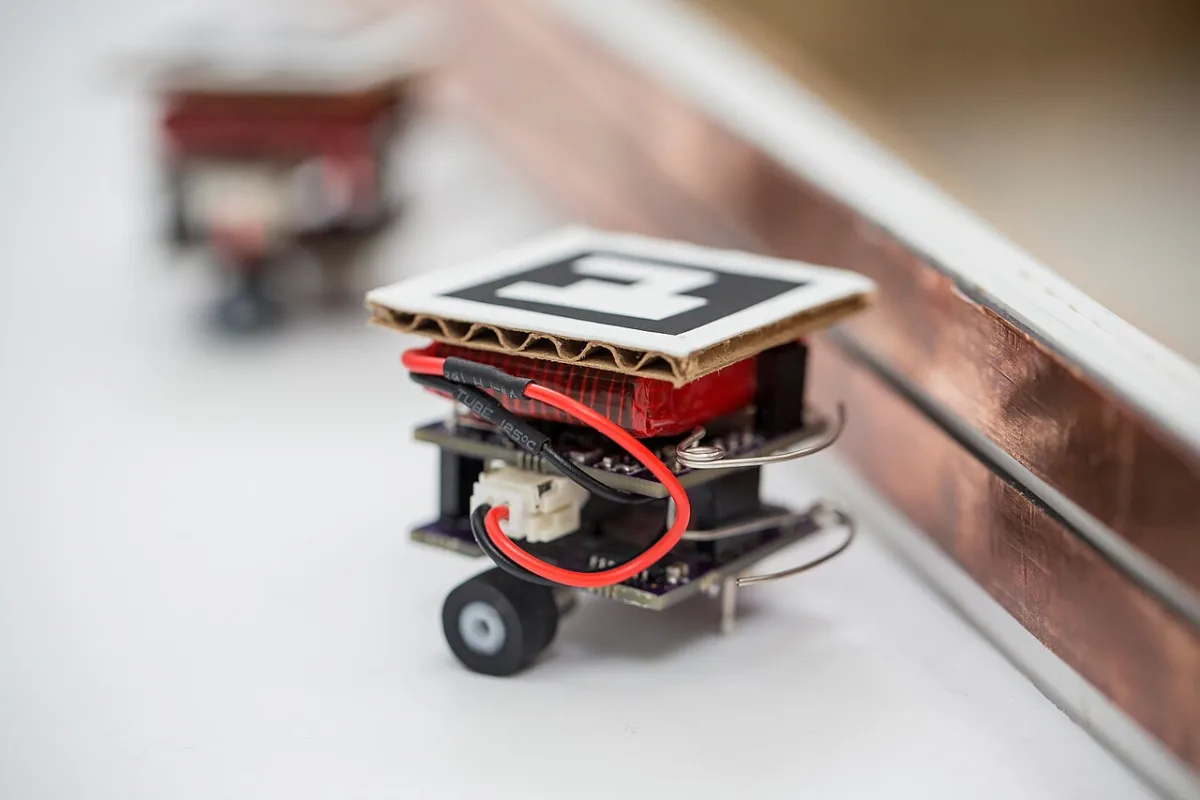
Small differential-drive robots built for the Robotarium at Georgia Tech, a swarm-robotics lab that has been open to the public over the internet since 2017. Anyone can register, test a multi-robot program in the free simulator and queue it to run on real robots, which charge themselves wirelessly between runs. By 2021 more than 485 users on every continent except Antarctica had run over 1,100 experiments. The robots themselves cannot be bought, and the newer GTernal robot (Raspberry Pi based) now appears in Robotarium papers.
- Type
- Wheeled robot · Research mobile manipulators & platforms
- Maker
- Georgia Tech GRITS Lab / Robotarium (USA)
- Released
- 2015
- Price
- Not for sale
- Status
- Not for sale (research)
- Best for
- Professionals & labs
- Programming
- Full SDK
Price and shipping
Never sold. The Robotarium at Georgia Tech lets anyone run code on its robots remotely, free of charge for research and education (Robotarium presentation, 2021; October 2026 check of its GitHub shows the simulators still maintained). GRITSbot X hardware design files are on GitHub. Year 2015 is the first GRITSbot paper (ICRA 2015).
Shipping: Not for sale. Not sold. The robots can be used remotely for free through the Robotarium website, and the GRITSbot X and GTernal design files are open on GitHub for labs that want to build their own.
Specifications
| Category | Wheeled rovers · Research mobile manipulators & platforms |
|---|---|
| Released | 2015 |
| Country | USA |
| Availability | Not for sale (research) |
| Programmability | Full SDK |
| Built-in autonomy | None / scripted · Moves only when controlled, or plays preset motions |
| LLM support | Possible via SDK · No LLM features. Experiments are Python or MATLAB scripts submitted to the Robotarium, which could in principle embed any planner. |
| Best for | Professionals & labs |
| Vision sensors | No vision sensors |
| Actuators | Stepper motors |
| Audio | No audio |
| Compute type | Arduino / ESP32 / microcontroller, Raspberry Pi |
| Remote control | Via SSH / web / bridge |
| Size | Original GRITSbot about 3 cm across and 60 g (unconfirmed); GRITSbot X and the newer GTernal are about 11 cm across |
| Drive | Two wheels, differential drive (stepper motors on the original GRITSbot) |
| Compute | ESP8266 Wi-Fi chip (160 MHz) plus an ATmega168 motor board on the original GRITSbot, Raspberry Pi plus a Teensy 4.0 on the newer GTernal |
| Vision | None on board (an overhead Vicon motion-capture system tracks every robot) |
| Lidar | None |
| Sensors | GRITSbot X has 7 infrared distance sensors, high-resolution wheel encoders and Wi-Fi; the original had 6 IR sensors and optional IMU |
| Runtime | Up to about 40 minutes on a 400 mAh LiPo (original GRITSbot); robots recharge wirelessly between experiments |
| Speed | Up to about 25 cm/s (original GRITSbot, unconfirmed); 0.2 m/s cap in the Robotarium simulator; GTernal about 26 cm/s |
| SDK | Open-source Robotarium Python simulator (MIT, Python 3.10+) and MATLAB simulator with barrier-certificate collision avoidance; scripts are uploaded through the Robotarium website and the run video and data are returned |
Common questions
How much does GRITSbot / GRITSbot X cost?
Not for sale. Never sold. The Robotarium at Georgia Tech lets anyone run code on its robots remotely, free of charge for research and education (Robotarium presentation, 2021; October 2026 check of its GitHub shows the simulators still maintained). GRITSbot X hardware design files are on GitHub. Year 2015 is the first GRITSbot paper (ICRA 2015).
Can GRITSbot / GRITSbot X be bought today?
No. It was never sold to the public.
Who makes GRITSbot / GRITSbot X?
GRITSbot / GRITSbot X is made by Georgia Tech GRITS Lab / Robotarium (USA). It came out in 2015.
Can GRITSbot / GRITSbot X be programmed?
Full SDK. Open-source Robotarium Python simulator (MIT, Python 3.10+) and MATLAB simulator with barrier-certificate collision avoidance; scripts are uploaded through the Robotarium website and the run video and data are returned.
Does GRITSbot / GRITSbot X have AI chat or LLM support?
Possible via SDK. No LLM features. Experiments are Python or MATLAB scripts submitted to the Robotarium, which could in principle embed any planner.
Ratings & reviews
Ratings and reviews load on the live site.
Related guides
- ROS 2 Guide · the software framework many robots use
- Robot Vision and Depth Sensors · cameras, lidar and other distance sensors
- Raspberry Pi Guide · every Pi compared for robot use
Similar robots
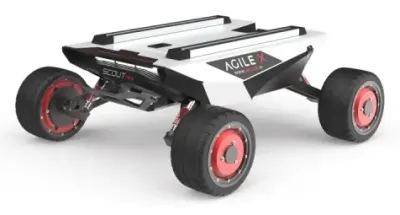 AgileX Scout MiniAgileX Robotics (China)$5,895.95 (Trossen)
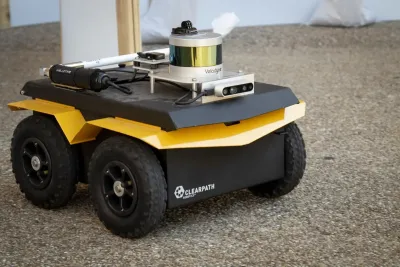 Clearpath JackalClearpath Robotics (Canada, part of Rockwell Automation)Quote (~$20,000+, est.)
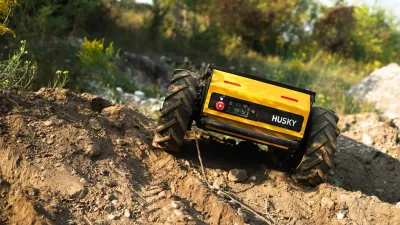 Clearpath Husky (A200 / A300)Clearpath Robotics (Canada, part of Rockwell Automation)Quote (~$30,000+, est.)
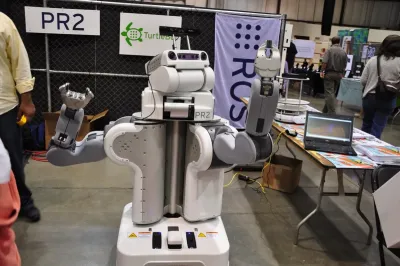 PR2Willow Garage (USA)Was $400,000
 Hello Robot Stretch (RE1 / 2 / 3 / 4)Hello Robot (USA)$24,950 (Stretch 3) / $29,950 (Stretch 4)
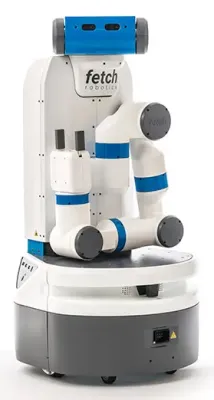 Fetch Mobile ManipulatorFetch Robotics (USA, later Zebra Technologies)Was about $100,000
Sources
Python simulator ↗ · GRITSbot X hardware ↗ · GTernal (newer robot) ↗ · Robotarium paper (ICRA 2017) ↗ · Robotarium presentation (2021) ↗
Image credits
- Image 1: source (Wikimedia Commons, CC BY-SA 4.0, by Dane Sponberg)