Overview
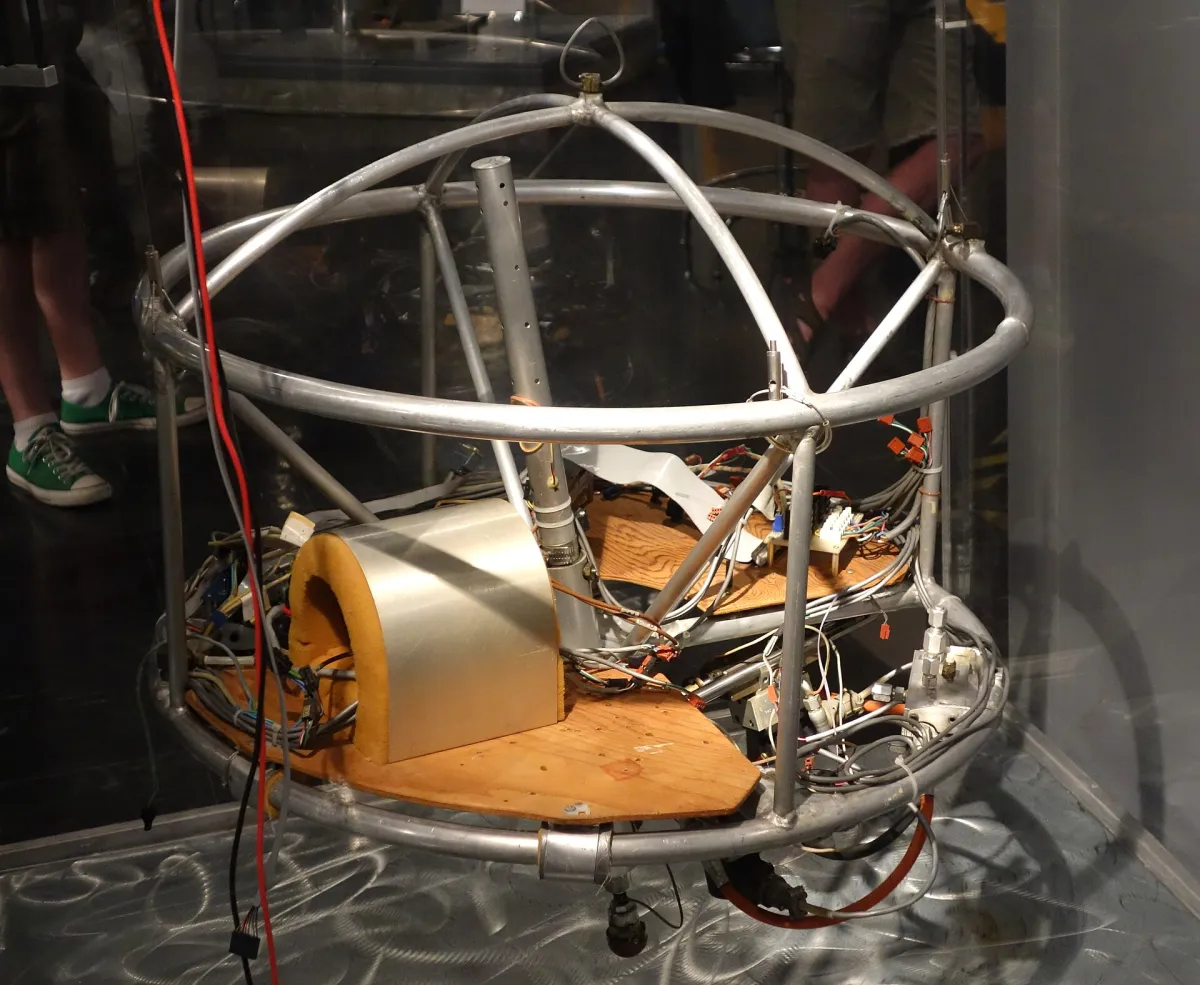
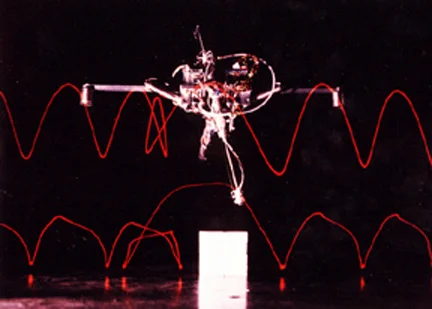
Marc Raibert's pogo-stick robots showed that dynamic balance could come from a surprisingly simple controller split into three parts, one for hopping height, one for forward speed through foot placement and one for body attitude. The planar hopper ran around a 2.5 m tether boom in 1980–1982, and the 3D hopper then balanced and ran freely on the lab floor at up to 2.2 m/s in 1983–1984. The same approach carried over to the Leg Lab's bipeds and quadrupeds after Raibert moved the lab to MIT, and later to Boston Dynamics machines such as BigDog. Modern hoppers such as Disney's LEAP and SALTO still use Raibert-style control.
- Type
- Jumping robot · Jumping & hopping robots
- Maker
- Carnegie Mellon University Leg Laboratory, later MIT Leg Lab (USA)
- Released
- 1980
- Price
- Not for sale
- Status
- Not for sale (research)
- Best for
- Professionals & labs
- Programming
- No programmability
Price and shipping
DARPA-funded research machines (planar hopper 1980–1982, 3D hopper 1983–1984). The 3D hopper is now displayed at the MIT Museum.
Shipping: Not for sale. Not available. Historic research machines, with the 3D hopper on display at the MIT Museum.
Specifications
| Category | Jumpers & hoppers · Jumping & hopping robots |
|---|---|
| Released | 1980 |
| Country | USA |
| Availability | Not for sale (research) |
| Programmability | No programmability |
| Built-in autonomy | None / scripted · Moves only when controlled, or plays preset motions |
| LLM support | None · No built-in LLM and no SDK to connect one. |
| Best for | Professionals & labs |
| Vision sensors | No vision sensors |
| Actuators | Mixed |
| Audio | No audio |
| Compute type | Laptop / PC as the brain |
| Remote control | Not programmable |
| Size | Planar hopper about 8.5 kg. 3D hopper 1.10 m tall, 17.3 kg |
| Locomotion | One telescoping pneumatic leg that acts as spring and thrust actuator. The planar hopper's hip was pneumatic, the 3D hopper uses a hydraulic 2-axis gimbal hip |
| Compute | Off-board minicomputer in a nearby room, linked by an umbilical cable |
| Camera | None |
| Sensors | Leg length and hip angle potentiometers, foot contact and body attitude sensing. The planar hopper also used sensors on its tether-boom pivot |
| Runtime | Continuous while on the umbilical (compressed air, hydraulic and electrical power supplied off-board) |
| Speed | Planar hopper up to 1.2 m/s, 3D hopper up to 2.2 m/s |
| SDK | None |
Common questions
How much does Raibert One-Leg Hoppers cost?
Not for sale. DARPA-funded research machines (planar hopper 1980–1982, 3D hopper 1983–1984). The 3D hopper is now displayed at the MIT Museum.
Can Raibert One-Leg Hoppers be bought today?
No. It was never sold to the public.
Who makes Raibert One-Leg Hoppers?
Raibert One-Leg Hoppers is made by Carnegie Mellon University Leg Laboratory, later MIT Leg Lab (USA). It came out in 1980.
Can Raibert One-Leg Hoppers be programmed?
No programmability.
Does Raibert One-Leg Hoppers have AI chat or LLM support?
None. No built-in LLM and no SDK to connect one.
Ratings & reviews
Ratings and reviews load on the live site.
Related guides
- Jumping Robots · the top 10 ranked by jump height
Similar robots
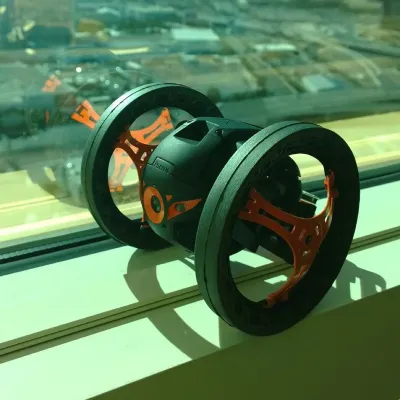 Parrot Jumping Sumo (and Jumping Race / Night)Parrot (France)Was $159.99 (2014)
 SALTO / SALTO-1PUC Berkeley Biomimetic Millisystems Lab (USA)Not for sale
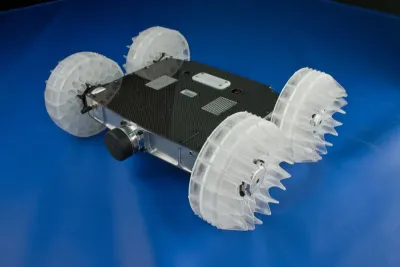 Sand FleaBoston Dynamics (USA)Not for sale
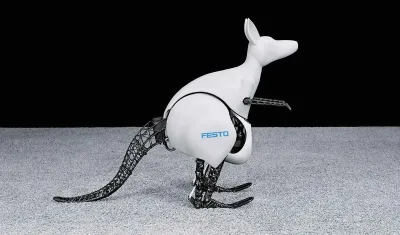 BionicKangarooFesto Bionic Learning Network (Germany)Not for sale
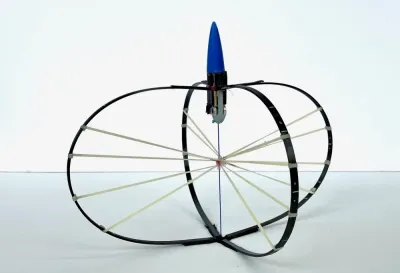 UCSB 30-Meter JumperUC Santa Barbara Hawkes Lab with Disney Research and Caltech (USA)Not for sale
 SpaceHopperETH Zurich Robotic Systems Lab student focus project (Switzerland)Not for sale
Sources
MIT Leg Lab Planar One-Leg Hopper ↗ · CMU second annual report (1983) ↗