Overview
Spinybot climbed concrete, stucco, brick and stone walls without suction or adhesive by catching tiny surface bumps with arrays of compliant steel microspines, an idea borrowed from insects and spiders. The first Spinybot used four spines per foot and managed only stucco and rough concrete, while SpinybotII's sixth-generation feet with ten independently sprung toes spread the load well enough to climb multi-story buildings and cling without power. The microspine feet were then transferred to the Boston Dynamics-led RiSE robot and later to perching drones, and the same lab went on to build Stickybot.
- Type
- Crawling robot · Climbers & inspection crawlers
- Maker
- Stanford University Biomimetics and Dextrous Manipulation Lab (USA)
- Released
- 2005
- Price
- Not for sale
- Status
- Not for sale (research)
- Best for
- Professionals & labs
- Programming
- No programmability
Price and shipping
University research robot (IEEE ICAR 2005, IJRR 2006).
Shipping: Not for sale. Not available. A university research project.
Specifications
| Category | Crawlers, snakes & climbers · Climbers & inspection crawlers |
|---|---|
| Released | 2005 |
| Country | USA |
| Availability | Not for sale (research) |
| Programmability | No programmability |
| Built-in autonomy | None / scripted · Moves only when controlled, or plays preset motions |
| LLM support | None · No built-in LLM and no SDK to connect one. |
| Best for | Professionals & labs |
| Vision sensors | Camera |
| Actuators | Hobby servos |
| Audio | No audio |
| Compute type | Arduino / ESP32 / microcontroller |
| Remote control | Not programmable |
| Size | About 58 cm long including tail, 0.4 kg with batteries and camera |
| Locomotion | Six legs in two alternating tripods, linkages ratchet the feet up the wall. Each foot has ten compliant toes with steel microspines, plus a long tail against pitch-back |
| Compute | 40 MHz PIC microcontroller |
| Camera | Small wireless camera (20 g) in the tail |
| Sensors | None for control (open-loop gait) |
| Runtime | Not published (7.4 V, 340 mAh LiPo onboard) |
| Speed | 2.3 cm/s climbing, can carry a 0.4 kg payload |
| SDK | None |
Common questions
How much does SpinybotII cost?
Not for sale. University research robot (IEEE ICAR 2005, IJRR 2006).
Can SpinybotII be bought today?
No. It was never sold to the public.
Who makes SpinybotII?
SpinybotII is made by Stanford University Biomimetics and Dextrous Manipulation Lab (USA). It came out in 2005.
Can SpinybotII be programmed?
No programmability.
Does SpinybotII have AI chat or LLM support?
None. No built-in LLM and no SDK to connect one.
Ratings & reviews
Ratings and reviews load on the live site.
Similar robots
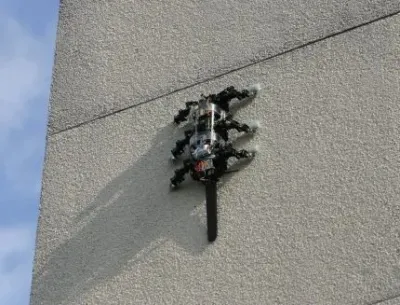 RiSE Climbing RobotBoston Dynamics with Stanford, CMU, UC Berkeley, Penn and Lewis & Clark (USA)Not for sale
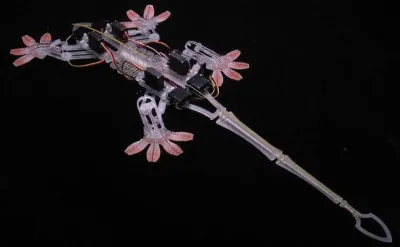 Stickybot / Stickybot IIIBiomimetics & Dexterous Manipulation Lab, Stanford University (USA)Not for sale
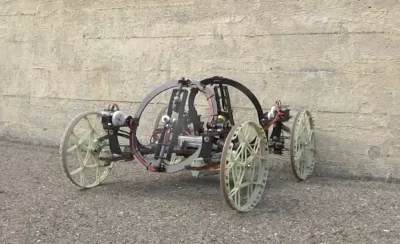 VertiGoDisney Research Zurich & ETH Zurich (Switzerland)Not for sale
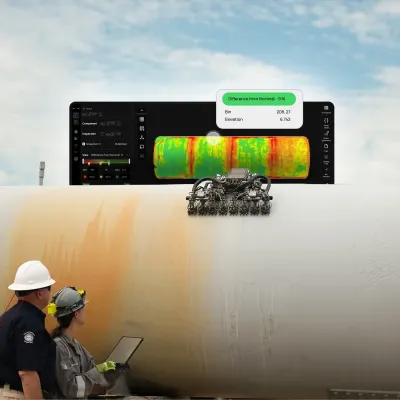 Gecko Robotics TOKA CrawlersGecko Robotics (Pittsburgh, USA)Service contract
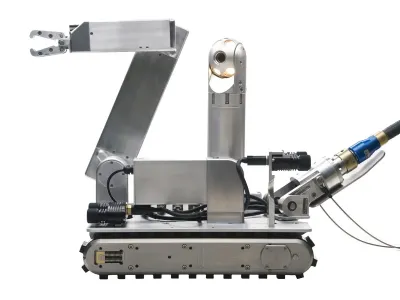 Inuktun / Eddyfi VersaTrax CrawlersEddyfi Technologies (formerly Inuktun, Canada)$139,000 (VersaTrax 450 TTC system)
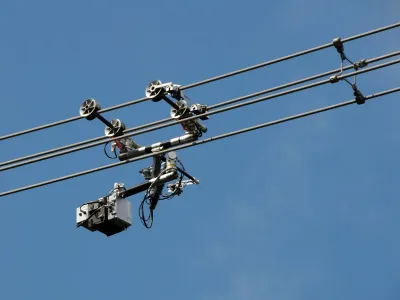 HiBot ExplinerHiBot (Japan)Price not public