Overview
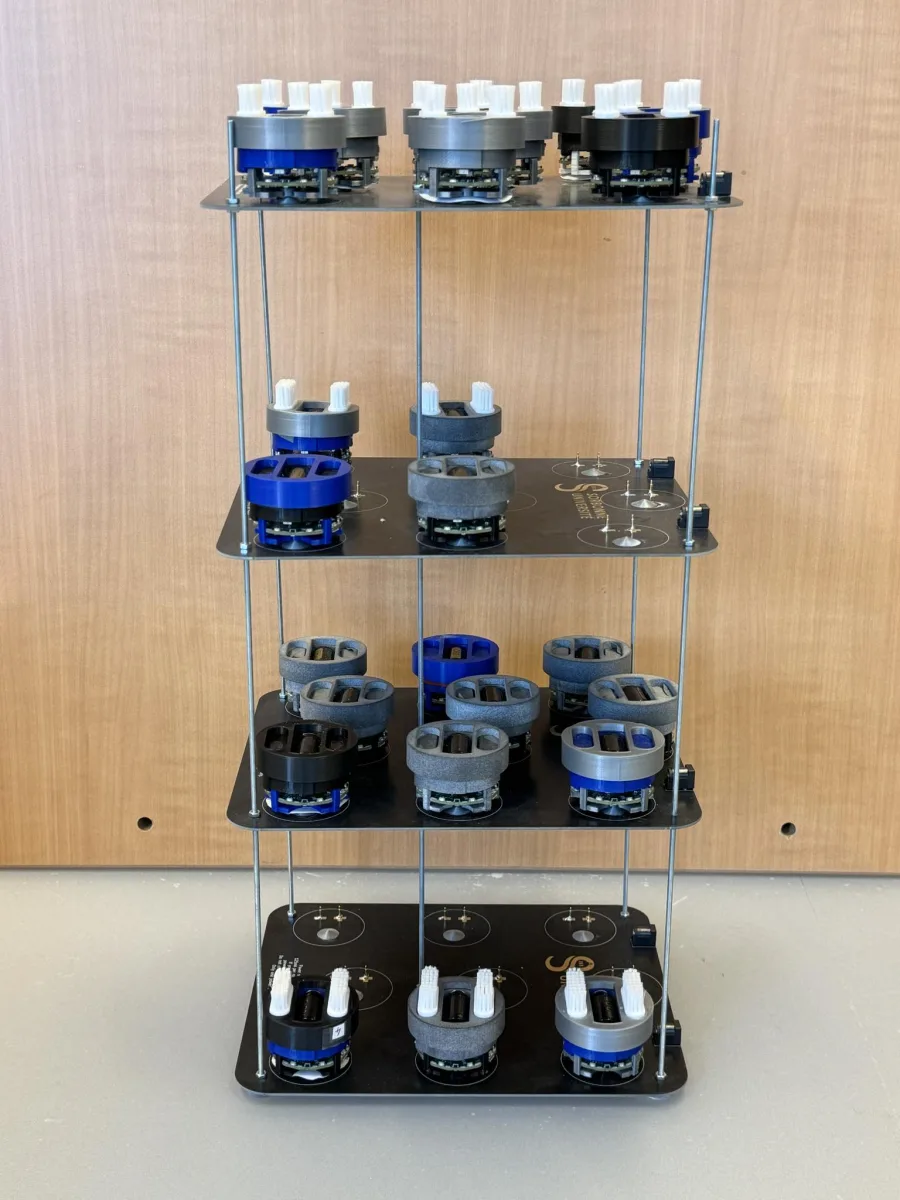
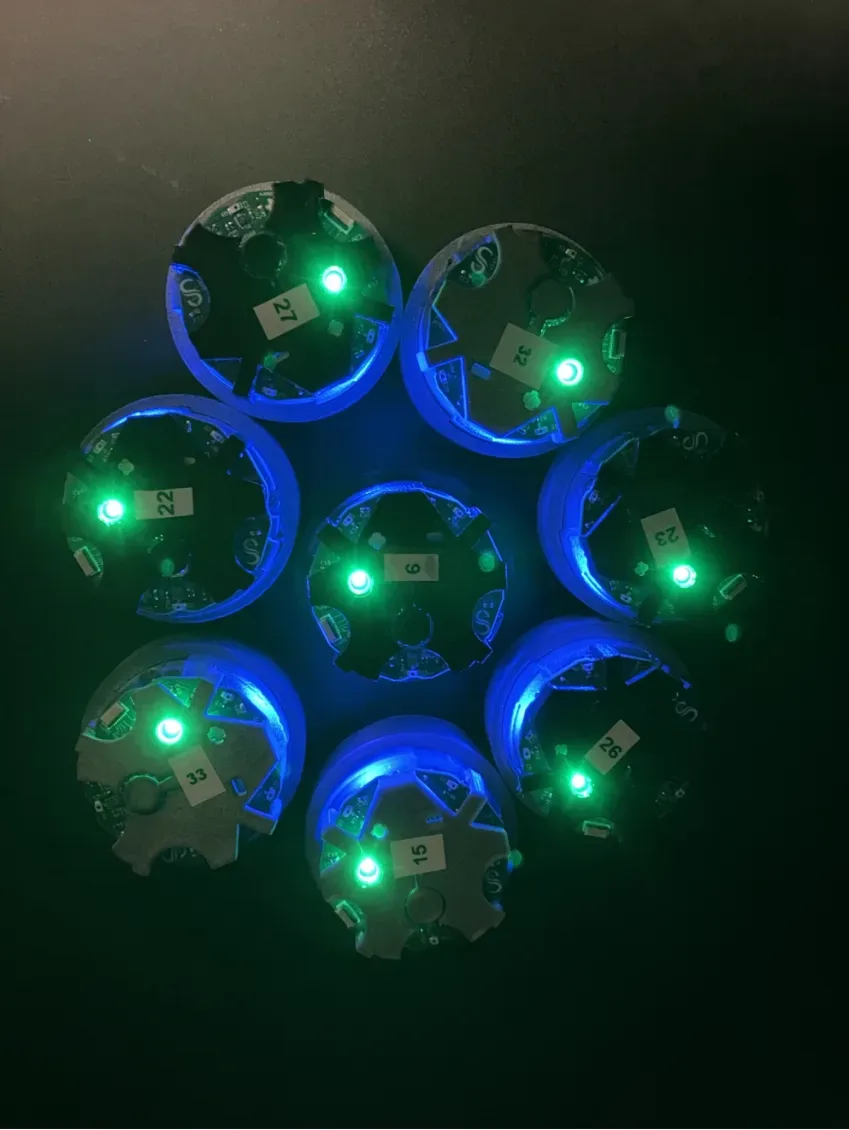
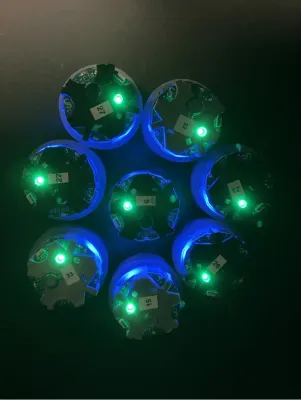
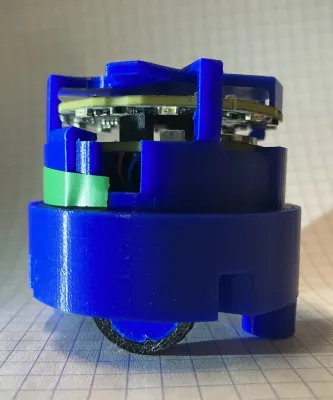
An open-source swarm robot from Sorbonne Université and ESPCI Paris-PSL, designed as a modern replacement for the discontinued Kilobot and used for both swarm robotics and active-matter physics. Robots talk to each other over four directional infrared channels, sending 64-byte messages at 60 Hz with nearly perfect delivery up to 10 cm, and each receiver tells the robot which of eight directions a message came from. In crowded groups a simple random-send rule (the Banshee protocol) spreads messages from robot to robot like gossip, and a handshake mode is available when two robots must be sure an exchange happened. More than 200 units were in daily use at several universities by 2025, including Université de Lorraine and Ochanomizu University in Japan. The catch is that it cannot be bought, so a lab has to order the boards, 3D print the shells and assemble each robot itself.
- Type
- Wheeled robot · Research mobile manipulators & platforms
- Maker
- Sorbonne Université ISIR / ESPCI Paris-PSL (France)
- Released
- 2022
- Price
- Not for sale
- Status
- Not for sale (research)
- Best for
- Professionals & labs
- Programming
- Open source (hardware + software)
Price and shipping
Never sold. The 2025 arXiv paper puts the assembled cost at about $280 (€250) per robot, and no company, shop or ordering page was found (October 2026 check of the project site and GitHub). Labs build their own from the open design, with the main circuit board made by an electronics assembly service and the rest 3D printed. Year 2022 is when the hardware and SDK repositories went public on GitHub; the main paper followed in April 2025.
Shipping: Not for sale. Not sold. All design files, 3D-printable parts and software are open on GitHub, so labs build their own; only the main Head board needs a professional electronics assembly service. Pogobot project site ↗
Specifications
| Category | Wheeled rovers · Research mobile manipulators & platforms |
|---|---|
| Released | 2022 |
| Country | France |
| Availability | Not for sale (research) |
| Programmability | Open source (hardware + software) |
| Built-in autonomy | None / scripted · Moves only when controlled, or plays preset motions |
| LLM support | None · No LLM features. Programs are small C files compiled for a RISC-V soft processor and loaded by cable or broadcast over infrared. |
| MuJoCo simulation | None found · Nothing found. |
| NVIDIA Isaac simulation | None found · Nothing found. |
| Gazebo simulation | None found · Nothing found. The team's own Pogosim simulator (C/C++, Box2D) runs the same C code as the real robots, models infrared packet loss and simulates 100 robots 14 to 21 times faster than real time. It is modeled on the Kilombo simulator used for Kilobots. |
| Best for | Professionals & labs |
| Vision sensors | No vision sensors |
| Actuators | DC / gear motors |
| Audio | No audio |
| Compute type | Arduino / ESP32 / microcontroller |
| Remote control | Via SSH / web / bridge |
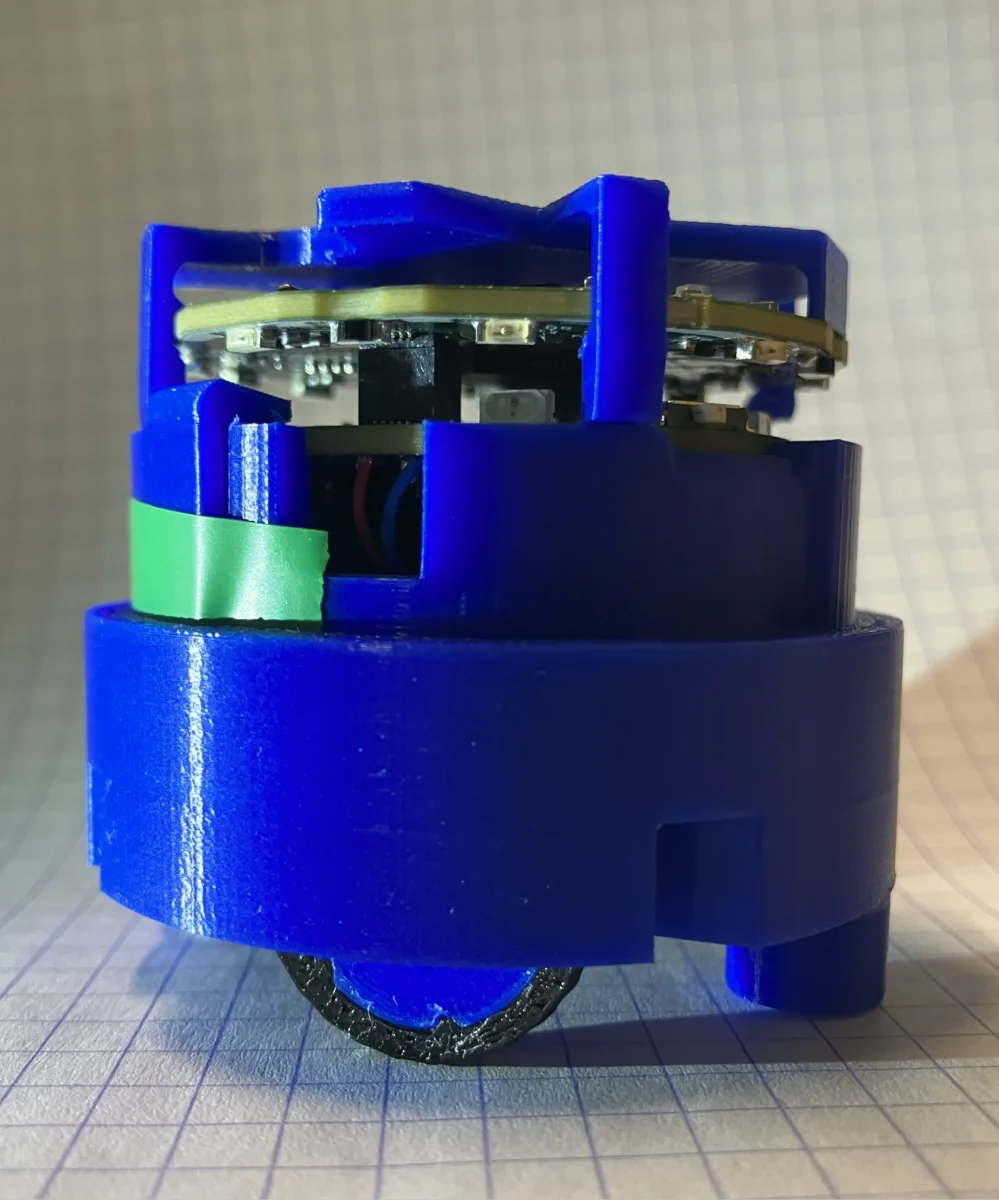
| Size | About 55 mm diameter (about 6 cm with some shells), 43 to 56 g depending on the locomotion module |
| Drive | Swappable 3D-printed skirts, either two wheels in differential drive or vibration stick-slip on toothbrush heads or printed TPU brushes; the board drives three motors, two for motion and one spare |
| Compute | Lattice iCE40UP5K FPGA running a 32-bit VexRiscv RISC-V soft processor (LiteX system-on-chip) |
| Vision | None |
| Lidar | None |
| Sensors | Four infrared emitter/receiver pairs (TS4231 chips, 1 to 10 MHz optical carrier) giving 8 direction sectors, three ambient light sensors (front-left, front-right, back), IMU, four programmable LEDs facing each direction plus status and charging LEDs |
| Runtime | 60 minutes (motors full speed, all LEDs on) to 120 minutes (half speed, no LEDs, no messages) on a 3.3 V LiFePO4 CR2 cell; a Pogocharger pad charges up to 9 robots in under 2 hours |
| Speed | Up to 25 cm/s with wheels, up to about 7 cm/s with TPU brushes; nylon toothbrush heads mostly spin (up to 15 rad/s) |
| SDK | C with the PogoLib/PogoAPI library over the Pogobios firmware, RISC-V GCC tool chain (MIT license), Pogosim simulator, Pogotrack video tracking, pogo-utils add-ons |
Common questions
How much does Pogobot cost?
Not for sale. Never sold. The 2025 arXiv paper puts the assembled cost at about $280 (€250) per robot, and no company, shop or ordering page was found (October 2026 check of the project site and GitHub). Labs build their own from the open design, with the main circuit board made by an electronics assembly service and the rest 3D printed. Year 2022 is when the hardware and SDK repositories went public on GitHub; the main paper followed in April 2025.
Can Pogobot be bought today?
No. It was never sold to the public.
Who makes Pogobot?
Pogobot is made by Sorbonne Université ISIR / ESPCI Paris-PSL (France). It came out in 2022.
Can Pogobot be programmed?
Open source (hardware + software). C with the PogoLib/PogoAPI library over the Pogobios firmware, RISC-V GCC tool chain (MIT license), Pogosim simulator, Pogotrack video tracking, pogo-utils add-ons.
Does Pogobot have AI chat or LLM support?
None. No LLM features. Programs are small C files compiled for a RISC-V soft processor and loaded by cable or broadcast over infrared.
Ratings & reviews
Ratings and reviews load on the live site.
Related guides
- ROS 2 Guide · the software framework many robots use
- Robot Vision and Depth Sensors · cameras, lidar and other distance sensors
- Raspberry Pi Guide · every Pi compared for robot use
Similar robots
 KilobotHarvard Self-Organizing Systems Research Group / K-Team (USA / Switzerland)$1,320 (10-pack)
 DropletCorrell Robotics Lab, University of Colorado Boulder (USA)Not for sale
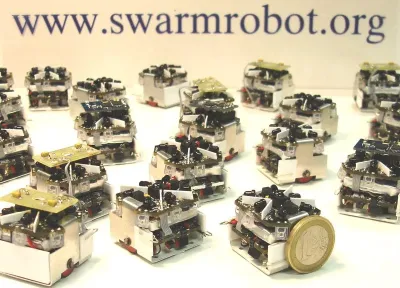 JasmineUniversity of Stuttgart / University of Karlsruhe, swarmrobot.org (Germany)Not for sale
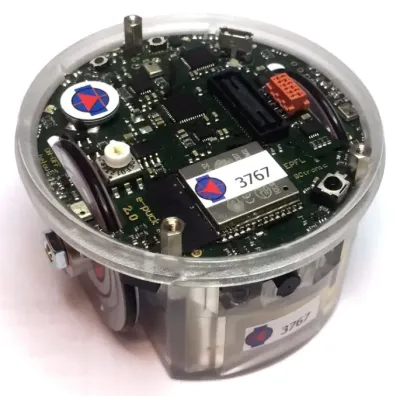 e-puck / e-puck2EPFL / GCtronic (Switzerland)$1,020
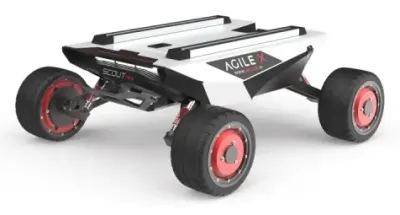 AgileX Scout MiniAgileX Robotics (China)$5,895.95 (Trossen)
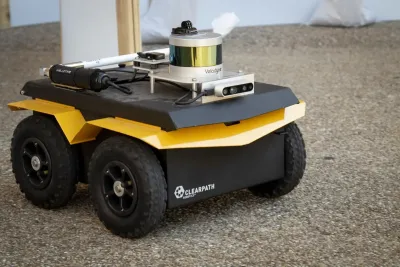 Clearpath JackalClearpath Robotics (Canada, part of Rockwell Automation)Quote (~$20,000+, est.)
Sources
Hardware (GitHub) ↗ · SDK (GitHub) ↗ · Pogosim simulator ↗ · arXiv paper (2025) ↗