Overview
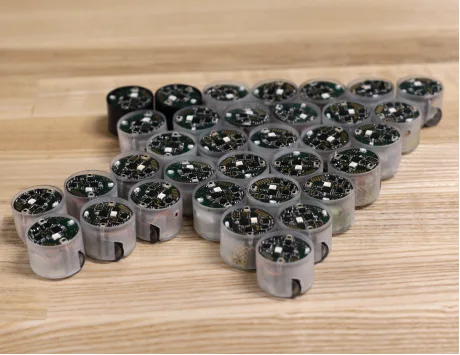
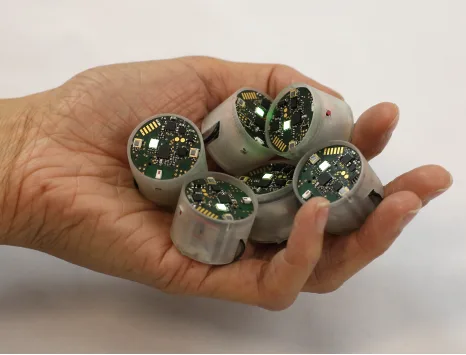
Coin-sized wheeled robots built at Stanford's Shape Lab with Inria to act as a moving tabletop display, where each robot is a physical pixel that can also be grabbed and moved by hand. The robots do not talk to each other at all, since a central computer is in charge of the whole group. Each robot decodes its own position from gray-code patterns flashed by a 3,000 Hz projector above the table and reports it back by radio. The computer runs the application, plans collision-free paths for every robot (HRVO) and sends each one its next waypoint 60 times a second, with each USB radio receiver serving 10 robots. The catch is that it only works inside the area lit by a special high-speed DLP projector, the robots must turn before moving since the drive is not holonomic, and every robot has to be built from the published files.
- Type
- Wheeled robot · Research mobile manipulators & platforms
- Maker
- Stanford Shape Lab / Inria (USA / France)
- Released
- 2016
- Price
- Not for sale
- Status
- Not for sale (research)
- Best for
- Professionals & labs
- Programming
- Open source (hardware + software)
Price and shipping
Never sold. The UIST 2016 paper puts the cost at about $50 per robot as built in the lab, possibly down to $20 if mass manufactured. The projector, radio receivers and charging station cost extra. Hardware, firmware and software are on GitHub under CC BY-SA 4.0 (October 2026 check, last updated May 2023). Year 2016 is the UIST paper.
Shipping: Not for sale. Never sold. The circuit boards, 3D-printed parts, charging station, firmware and software are published on GitHub for labs that want to build their own, and the tracking setup needs a TI DLP LightCrafter projector.
Specifications
| Category | Wheeled rovers · Research mobile manipulators & platforms |
|---|---|
| Released | 2016 |
| Country | USA, France |
| Availability | Not for sale (research) |
| Programmability | Open source (hardware + software) |
| Built-in autonomy | None / scripted · Moves only when controlled, or plays preset motions |
| LLM support | Possible via SDK · No LLM features. Applications are openFrameworks (C++) or Processing programs on a computer, which could in principle call an LLM to choose where the robots go. |
| MuJoCo simulation | None found · Nothing found. |
| NVIDIA Isaac simulation | None found · Nothing found. |
| Gazebo simulation | None found · Nothing found. The ZooidManager software has its own simulation layer that plans paths before sending goals to the real robots, but no Gazebo, ARGoS or Webots model was found. |
| Best for | Professionals & labs |
| Vision sensors | No vision sensors |
| Actuators | DC / gear motors |
| Audio | No audio |
| Compute type | Arduino / ESP32 / microcontroller |
| Remote control | Via SSH / web / bridge |
| Size | 26 mm diameter, 21 mm tall, about 12 g |
| Drive | Two micro gear motors (FA-GM6-3V-25) placed off-axis to save space, differential drive with caster wheels |
| Compute | STM32F051C8 (48 MHz Arm Cortex-M0) |
| Vision | None (two photodiodes on top read patterns from an overhead projector to find the robot's position) |
| Lidar | None |
| Sensors | Two photodiodes for projector-based position tracking (about 73 updates per second, about 1.1 mm resolution over a 1 × 0.63 m area), capacitive touch sensing around the body, RGB LED, nRF24L01+ 2.4 GHz radio |
| Runtime | About 1 hour of continuous moving on a 100 mAh LiPo, longer in normal use |
| Speed | About 74 cm/s maximum, about 44 cm/s in typical use |
| SDK | Open-source ZooidManager (openFrameworks, C++) with a prebuilt macOS app, client APIs for openFrameworks and Processing, robot and receiver firmware for the STM32, example apps (shapes, keyframes, scatterplot, stop motion) |
Common questions
How much does Zooids cost?
Not for sale. Never sold. The UIST 2016 paper puts the cost at about $50 per robot as built in the lab, possibly down to $20 if mass manufactured. The projector, radio receivers and charging station cost extra. Hardware, firmware and software are on GitHub under CC BY-SA 4.0 (October 2026 check, last updated May 2023). Year 2016 is the UIST paper.
Can Zooids be bought today?
No. It was never sold to the public.
Who makes Zooids?
Zooids is made by Stanford Shape Lab / Inria (USA / France). It came out in 2016.
Can Zooids be programmed?
Open source (hardware + software). Open-source ZooidManager (openFrameworks, C++) with a prebuilt macOS app, client APIs for openFrameworks and Processing, robot and receiver firmware for the STM32, example apps (shapes, keyframes, scatterplot, stop motion).
Does Zooids have AI chat or LLM support?
Possible via SDK. No LLM features. Applications are openFrameworks (C++) or Processing programs on a computer, which could in principle call an LLM to choose where the robots go.
Ratings & reviews
Ratings and reviews load on the live site.
Related guides
- ROS 2 Guide · the software framework many robots use
- Robot Vision and Depth Sensors · cameras, lidar and other distance sensors
- Raspberry Pi Guide · every Pi compared for robot use
Similar robots
 CelluloEPFL CHILI Lab (Switzerland)Not for sale
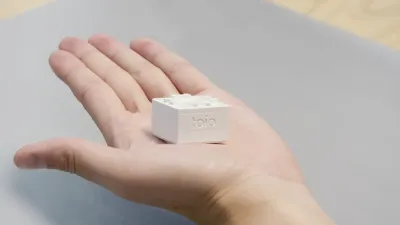 toio Core CubeSony Interactive Entertainment (Japan)$48
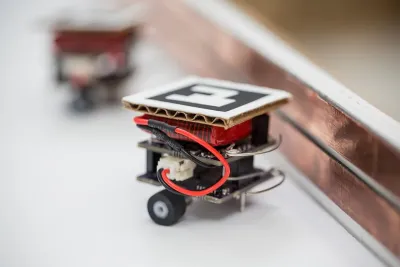 GRITSbot / GRITSbot X (Robotarium)Georgia Tech GRITS Lab / Robotarium (USA)Not for sale
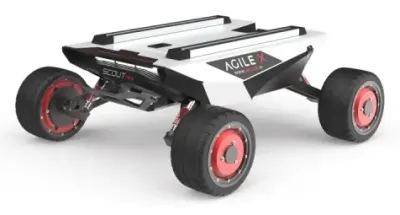 AgileX Scout MiniAgileX Robotics (China)$5,895.95 (Trossen)
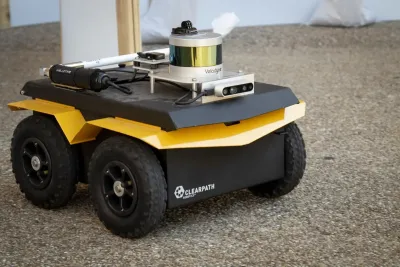 Clearpath JackalClearpath Robotics (Canada, part of Rockwell Automation)Quote (~$20,000+, est.)
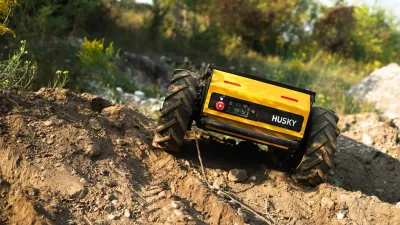 Clearpath Husky (A200 / A300)Clearpath Robotics (Canada, part of Rockwell Automation)Quote (~$30,000+, est.)